The blocks they know, with your class built in.
AlpsBlocks is built on the open-source Scratch editor, so it works the way students expect. Alps puts it inside your class: a ready course, assignments and due dates, every save kept, and grading beside the running project.
Teach the built-in Joy of Computing course, write AlpsBlocks projects of your own, or let students build freely in their Sandbox, all with the sign-in they already use.
Play it. Build it. Grade it.
One project from the book, from a student’s first look to your published grade.
A scripted walkthrough with sample students. The editor is AlpsBlocks running the book’s Rock Paper Scissors project.
Three ways to use AlpsBlocks in your class
Start from the course that comes with Alps, write projects of your own, or let students build whatever they like.
Teach the built-in course
Built in
Joy of Computing comes with Alps: 53 projects across 14 units, from a first animation to recursion, most with a rubric and a reference solution. Add it to a class and students are building today.
See the courseWrite your own AlpsBlocks projects
My Activities › Create Activity › Block Project › AlpsBlocks
Build the starting project in AlpsBlocks itself, then add instructions, predictions students answer before they edit, a requirements checklist they see ticked off, and a reference solution. Place it in any class. Publish a new version later, and students keep their own work.
Free building in the Sandbox
Sandbox › New Sandbox › AlpsBlocks
Students and teachers start AlpsBlocks projects of their own, outside any coursework. Nothing there is graded, work saves as they build, and students can copy an example you share to start from.
 AlpsBlocks
Familiar from the first click
The blocks, sprites, costumes, sounds and stage work the way students expect, and so do the paint and sound editors. The difference is that it lives in your class: instructions and requirements beside the editor, and every save kept.
- ✓ The same blocks and the same project format as the Scratch editor
- ✓ Requirements check off as students build
- ✓ Work saves as they go, and every save is kept
- ✓ Pen, Music and Makey Makey extensions
- ✓ Runs in the browser, so it works on Chromebooks

Made for a classroom, not a public website
Everything a student makes stays in your class.
No accounts to make, no public gallery
Students sign in to Alps the way they already do. There is no separate account and no public sharing.
Media you can use in class
The library carries pictures and sounds whose licenses were confirmed, your course’s own media, and anything students draw themselves.
Bring the projects you already use
When you build a project or a class’s starter, you can start from a Scratch 3 project file (.sb3) you already have.
Students read the code before they write it
Each project can open in play mode first. Students run it, look inside, and predict what it does. Then the editor opens.
-
1 Play it
Press the green flag and watch what it does. Nothing here is saved.
-
2 Look inside
Read the scripts that make it work, without changing them.
-
3 Predict
Answer a few questions about what it will do. Wrong is fine; say why.
-
4 Build
Edit in the full AlpsBlocks editor. Work saves every 15 seconds, and every save is kept.
-
5 Submit
Turn it in. You see it the moment they do.
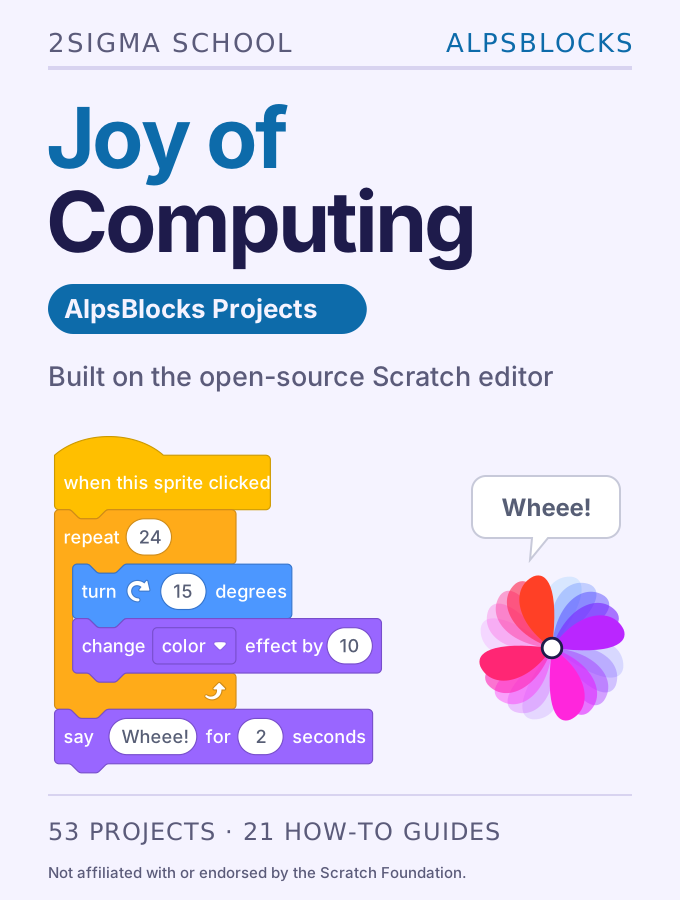
53 projects · 21 how-to guides
Joy of Computing: AlpsBlocks Projects
The same project course as the Snap! edition, built for AlpsBlocks: games, art, music and stories, each project building one idea on the last, from a first animation to recursion.
In every project
- ✓ Objectives, and step-by-step instructions with pictures
- ✓ A starter project students build from
- ✓ A reference solution, on most projects
- ✓ A rubric you score in one click per criterion, on most projects
Which edition?
Choose AlpsBlocks when students already know the blocks from the Scratch editor and you want them building on day one. Choose the Snap! edition to go further, into blocks that report values and map and keep over lists.
Projects such as Rock Paper Scissors, Flying Dinosaur, Space Invaders, Flower Garden and Tree Recursion. See the whole library.
AlpsBlocks books on the shelf
Joy of Computing comes with Alps. Have a block-based course of your own? We bring it into Alps with full fidelity.
Grade a whole class without leaving the project
Open any student’s project running, score it beside the work, and move to the next student in one click.

Try it yourself first
Every project in the book opens as your own copy, so you can build it before your students do. View solution opens the reference solution; students never see it.
Move through the class
Projects open read-only and running, just as the student left them. ‹ Prev and Next › name the student they open. Submitted work comes first, and students who haven’t started are skipped.
Score the rubric beside the work
Click a level for each criterion and the total updates as you go. Take a suggested level or pick your own, and review any grade Alps AI gave before it counts. Publish, and the grade reaches the Gradebook and your LMS.
See how it came together
Every save is kept. Play a student’s versions back, compare any two, or restore an earlier one. Restoring never removes anything.
Help inside their project
Change a student’s project to get them unstuck, and leave a note on why. They keep their own version, and yours becomes the newest.
See who needs you, live
While class is on, Live Activity shows who is building, who is reading and who has stopped, so you know whose project to open first.
Prefer Snap!?
The same Joy of Computing course is built for Snap! too, with its own projects and rubrics.
On the shelf with 40+ titles
Joy of Computing sits in the curriculum library beside textbooks, labs and question banks for every CS course.
Beside the book you teach
Add the projects to a class that already uses another textbook, and assign from both.
AlpsBlocks is a fork of the open-source Scratch editor. It is not an official Scratch product, and is not affiliated with or endorsed by the Scratch Foundation. Scratch is developed by the Scratch Foundation and its partners and affiliates. See https://scratch.org/.
Some pictures in the projects shown are from the Scratch 1.4 media library, used under CC BY-SA 3.0, and the Scratch 2.0 media library, used under CC BY-SA 2.0; edited copies are shared under the same licence. Scratch is a project of the Scratch Foundation, in collaboration with the Lifelong Kindergarten Group at the MIT Media Lab (scratch.mit.edu). Some characters are by Kenney, released under CC0.
Bring AlpsBlocks to your class
Start with Joy of Computing, write a project of your own, or open a Sandbox. Grading waits for you beside each project.